
A Frustrating Problem That's More Common Than You Think
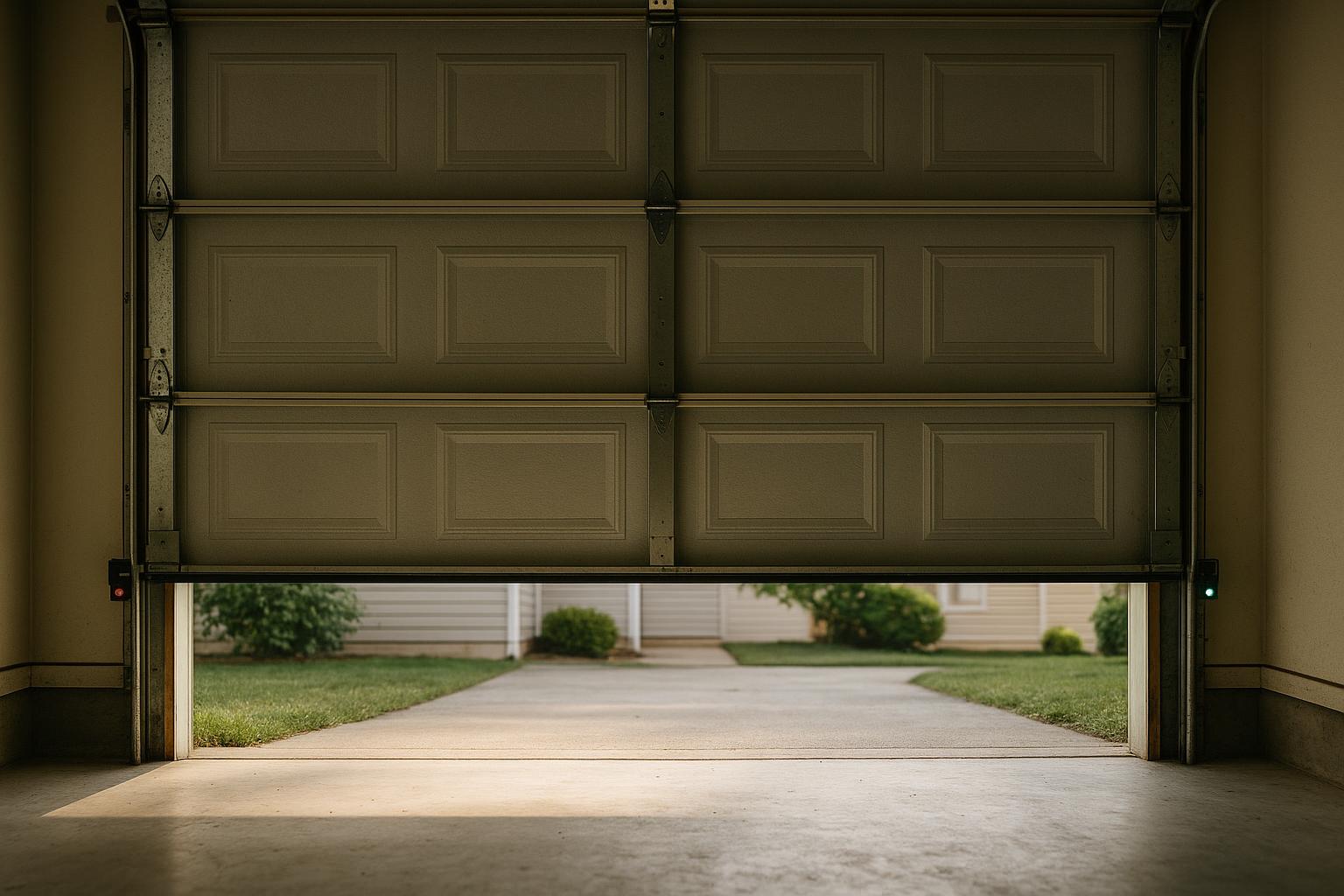
You press the button on your garage door remote, the door starts its descent, and then — just before it reaches the floor — it reverses and goes right back up. You try again. Same thing. Maybe it works on the third try, or maybe it doesn't work at all.
This is one of the most common garage door complaints we hear from homeowners in Cloverdale and the surrounding Sonoma County communities. The good news is that a reversing garage door is usually a safety feature working as intended. The bad news is that something is triggering it when it shouldn't be, and figuring out the cause can be tricky without knowing where to look.
Let's walk through the most likely reasons your garage door reverses before closing completely, what you can fix yourself, and when it's time to call a professional.
Understanding Why Garage Doors Are Designed to Reverse
Before diving into troubleshooting, it helps to understand why your garage door has a reversal mechanism in the first place. Federal law has required automatic garage door openers to include safety reversal systems since 1993. These systems are designed to prevent the door from closing on a person, pet, or object.
There are two primary safety mechanisms:
- Photo-eye sensors: Two small sensors mounted near the base of the door tracks on either side. They project an invisible beam across the opening. If something breaks that beam, the door reverses.
- Auto-reverse (force sensitivity): If the door encounters physical resistance while closing — like hitting an object or binding on the tracks — it automatically reverses direction.
When your door reverses unexpectedly, one of these systems is almost always involved. The question is whether the trigger is a real obstruction or a malfunction.
Check Your Photo-Eye Sensors First
The photo-eye sensors are the number one culprit when a garage door reverses without any visible obstruction. Here's what to check:
Are the Sensors Aligned?
Each sensor has a small LED indicator light. Typically, one glows green (the receiving sensor) and one glows amber (the sending sensor). If the green light is off or flickering, the sensors are misaligned. Even a slight bump from a bike, lawnmower, or broom can knock them out of position.
Gently adjust the sensor bracket until the green light holds steady. Both lights should be solid when the sensors are properly aligned.
Are the Lenses Dirty?
Cloverdale's mix of rural roads, vineyard dust, and seasonal pollen can coat sensor lenses surprisingly fast. Wipe each lens with a soft cloth. This simple step solves the problem more often than you'd expect.
Is There Something Blocking the Beam?
Look carefully along the path between the two sensors. A cobweb, a leaf blown in by the wind, or even direct afternoon sunlight can interfere with the beam. Remove any debris and consider whether the sun hits your garage opening at certain times of day — sun glare on the receiving sensor is a surprisingly common issue in homes with west-facing garages.
Inspect the Tracks and Rollers
If the sensors check out fine, the problem may be mechanical. Your garage door travels along metal tracks guided by rollers, and any obstruction or damage along that path can trigger the auto-reverse function.
- Look for debris in the tracks. Small rocks, leaves, or even hardened dirt can prevent the door from closing smoothly.
- Check for bent or dented tracks. A section of track that's been bumped by a car or heavy object can create enough resistance to trigger a reversal.
- Examine the rollers. Worn, cracked, or seized rollers create friction. Nylon rollers can crack over time, and steel rollers without lubrication can bind.
You can clean the tracks with a damp cloth and apply a silicone-based lubricant to the rollers. Avoid using WD-40 on garage door parts — it's a solvent, not a long-term lubricant, and it can actually attract more dirt over time.
Check the Close-Force Setting on Your Opener
Every garage door opener has adjustable force settings that control how much power it uses to open and close the door. If the close-force setting is too low, the opener may interpret normal resistance — like the weight of the door itself — as an obstruction and reverse.
Most openers have small adjustment dials or screws on the back or side of the motor unit, often labeled "close force" and "open force." Your owner's manual will show you exactly where these are and how to adjust them. Make small adjustments — a quarter turn at a time — and test the door after each change.
However, be cautious here. Setting the close force too high defeats the purpose of the safety mechanism. If you're not comfortable making this adjustment, it's a good idea to have a technician handle it.
Examine the Limit Switch Settings
The limit switches tell your opener how far the door should travel in each direction. If the close-limit setting is off, the opener may think the door has hit the floor when it hasn't, or it may try to push the door past the floor, encounter resistance, and reverse.
Symptoms of incorrect limit settings include:
- The door closes all the way but immediately reverses back up
- The door stops an inch or two above the floor
- The opener motor continues running after the door has fully closed
Limit switch adjustments vary by opener brand and model. If you have your owner's manual, it will walk you through the process. Otherwise, this is another adjustment best left to a professional, since incorrect settings can damage the opener or compromise safety.
When the Problem Is Your Springs
Garage door springs counterbalance the weight of the door, making it light enough for the opener to lift and lower. When springs wear out, lose tension, or break, the door becomes significantly heavier. The opener has to work much harder to move it, and the increased resistance can trigger the auto-reverse.
Signs that your springs may be the issue:
- The door feels noticeably heavy when you lift it manually
- The door slams down quickly when disconnected from the opener
- You can see a visible gap in one of the torsion springs above the door
Spring replacement is not a DIY job. Garage door springs are under extreme tension and can cause serious injury if handled improperly. If you suspect a spring problem, call a qualified technician.
Could It Be the Opener Itself?
If you've checked the sensors, tracks, force settings, limit switches, and springs, and the door still reverses, the opener's logic board or internal components may be failing. Openers typically last 10 to 15 years, and as they age, circuit boards can develop issues that cause erratic behavior.
In these cases, repair may be possible, but replacement is sometimes the more cost-effective option — especially if your opener lacks modern safety features, battery backup, or smart connectivity.
When to Call Precision Garage Door of Cloverdale
Some of these fixes are straightforward enough for a handy homeowner. Cleaning sensors, clearing debris from tracks, and lubricating rollers are all reasonable weekend tasks. But if the problem persists, involves springs, or requires adjustments to the opener's internal settings, professional service is the safer and more reliable route.
At Precision Garage Door of Cloverdale, we diagnose reversing issues quickly and explain exactly what's going on before we do any work. We serve homeowners throughout Cloverdale, Healdsburg, Geyserville, and the greater Sonoma County area. If your garage door won't stay down, give us a call — we'll get it working right.