
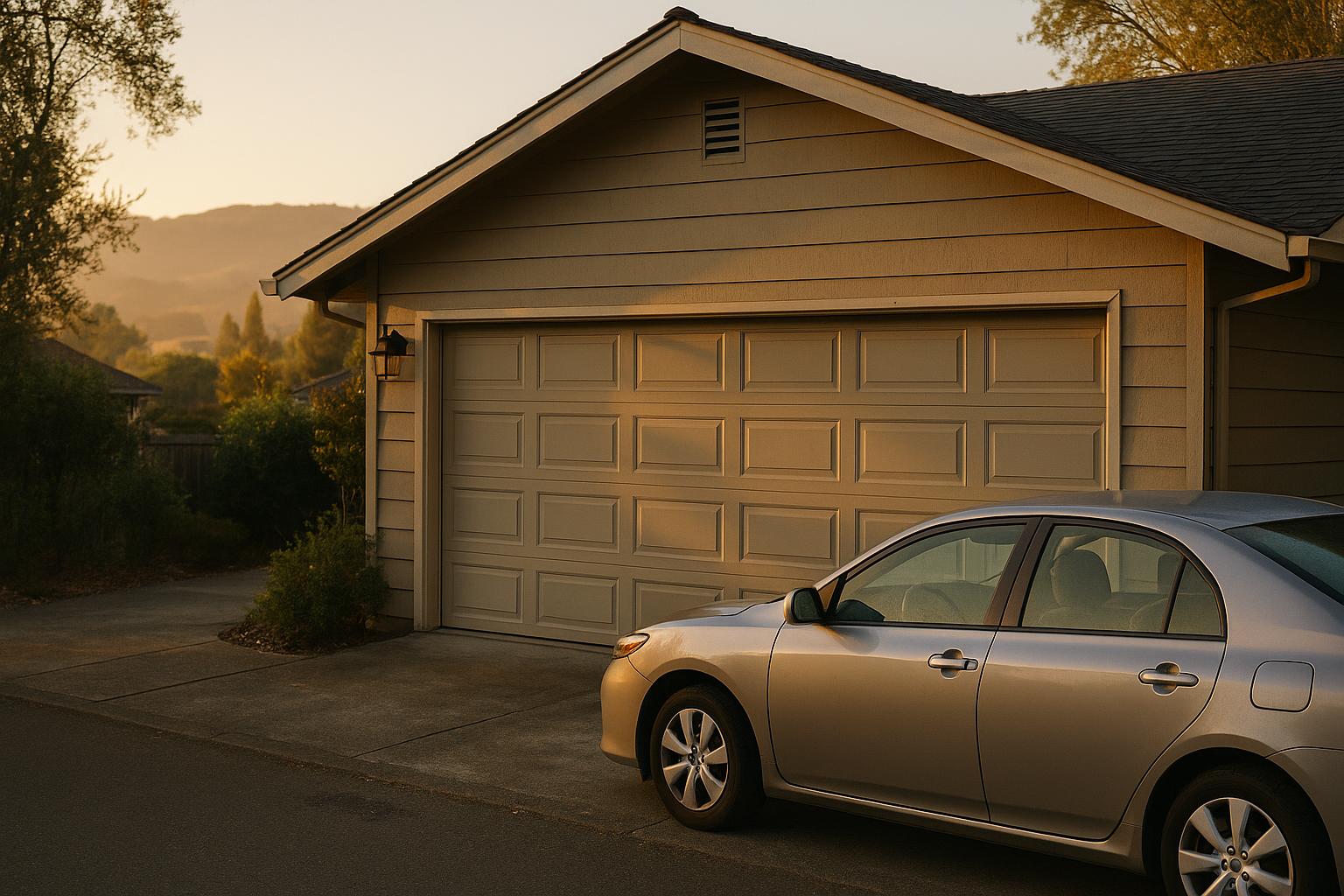
You're Running Late and Your Garage Door Won't Budge
It's a scenario that plays out in Cloverdale driveways more often than you'd think. You press the button on your garage door opener, hear a click or a hum — and nothing happens. Or maybe the door lifts a few inches and stops. You're already running behind, the coffee hasn't kicked in yet, and now you're stuck.
Before you panic or start pulling on the door manually, take a breath. A garage door that won't open in the morning usually has a diagnosable cause, and some of them you can even fix yourself. Here's a practical walkthrough of the most common reasons this happens and what you should do about each one.
1. The Opener Remote Batteries Are Dead
It sounds almost too simple, but dead batteries in your garage door remote are one of the most common reasons people think their door is broken. If pressing the remote does absolutely nothing — no light on the opener unit, no sound, no movement — start here.
What to do: Replace the batteries in your remote and try again. If the wall-mounted button inside the garage still operates the door, the remote was the problem all along. Keep spare batteries in your glove box or kitchen drawer so you're never caught off guard.
2. The Opener Is Unplugged or Has No Power
Power outages overnight, a tripped breaker, or an accidentally unplugged opener can all leave you stranded in the morning. This is especially common in Cloverdale during winter storms when power fluctuations are more frequent.
What to do: Check that the opener unit is plugged in. Then check your electrical panel for a tripped circuit breaker. If power was restored after an outage, the opener may need to be reset. Consult your owner's manual for the reset procedure, or simply unplug the unit for 30 seconds and plug it back in.
3. The Safety Sensors Are Blocked or Misaligned
Modern garage doors have photoelectric safety sensors mounted near the floor on either side of the door opening. If something is blocking the beam between them — a leaf, a spiderweb, a trash can, even morning condensation on the lens — the door may refuse to close or, in some cases, won't respond at all.
What to do: Look at the small LED lights on each sensor. Both should be lit and steady. If one is blinking or off, check for obstructions and gently wipe the sensor lenses with a dry cloth. Make sure neither sensor has been bumped out of alignment. You can usually nudge them back into position by hand.
4. The Door Is Locked — Manually
Many garage doors have a manual lock built into the door itself, separate from the opener. If someone accidentally engaged it, the opener motor will strain against a locked door and either stall or disengage.
What to do: Check the lock handle or slide bolt on the inside of the door. If it's engaged, unlock it and try the opener again. If you hear the motor running but the door doesn't move, this is a likely culprit.
5. A Broken Spring
This is the most serious — and most common — mechanical reason a garage door won't open. Torsion springs bear the weight of the door, and when one breaks, the opener motor simply can't lift the load. You might hear the motor straining, or the door might lift just a couple of inches before stopping.
What to do: Look at the springs mounted above the door on the inside of the garage. A broken spring will have a visible gap in the coil. Do not attempt to open the door manually or repair the spring yourself. Garage door springs are under extreme tension and can cause serious injury. This is a job for a trained technician.
If you're in Cloverdale or the surrounding areas like Healdsburg or Geyserville, we can typically get to you the same day for a spring replacement.
6. The Trolley Is Disconnected
Most garage door openers have an emergency release cord — usually a red handle hanging from the rail. If this has been pulled, the door is disconnected from the opener and will only move manually.
What to do: Pull the release cord back toward the opener to re-engage the trolley. Then try operating the door with the remote or wall button. The trolley should click back into place when the opener runs.
7. Cold Weather Is Affecting the Door
Mornings in Cloverdale can get surprisingly cold, especially from late fall through early spring. Cold temperatures can cause metal components to contract, lubricant to thicken, and weatherstripping to stick to the garage floor or threshold.
What to do: If the door seems stuck to the floor, don't force it. Gently break the seal by pressing the wall button and letting the opener try to lift it. If the door moves sluggishly, the tracks and rollers may need fresh lubrication with a silicone-based garage door lubricant. Avoid using WD-40, which can attract dust and grime over time.
8. The Opener's Force Settings Need Adjustment
Garage door openers have adjustable force settings that control how hard the motor works to open and close the door. If these settings are too low, the opener may not generate enough force to lift the door, especially as components age and friction increases.
What to do: Most openers have force adjustment screws or dials on the back or side of the motor unit. Small adjustments can make a difference, but be cautious — setting the force too high can be a safety hazard. If you're unsure, it's best to have a professional calibrate the settings.
When to Call a Professional
If you've checked the basics — batteries, power, sensors, locks, and the emergency release — and the door still won't open, it's time to call for help. Issues involving broken springs, damaged cables, bent tracks, or opener motor failure require professional tools and expertise.
Attempting DIY repairs on high-tension components is genuinely dangerous. Every year, people are seriously injured trying to fix garage door springs and cables without proper training.
At Precision Garage Door of Cloverdale, we respond quickly because we know a stuck garage door isn't just an inconvenience — it can trap your car, compromise your home's security, and throw off your entire schedule. We serve homeowners throughout Cloverdale, Healdsburg, Geyserville, Dry Creek, and the greater Sonoma County area with same-day service whenever possible.
A Quick Morning Checklist to Prevent Problems
- Test your garage door remote weekly and keep spare batteries on hand
- Visually inspect springs and cables once a month for wear or damage
- Keep the sensor lenses clean and the area around them clear
- Lubricate rollers, hinges, and tracks every six months
- Schedule annual professional maintenance to catch small problems early
A little preventive attention goes a long way toward making sure your garage door works every single morning — no surprises, no delays, no stress.