
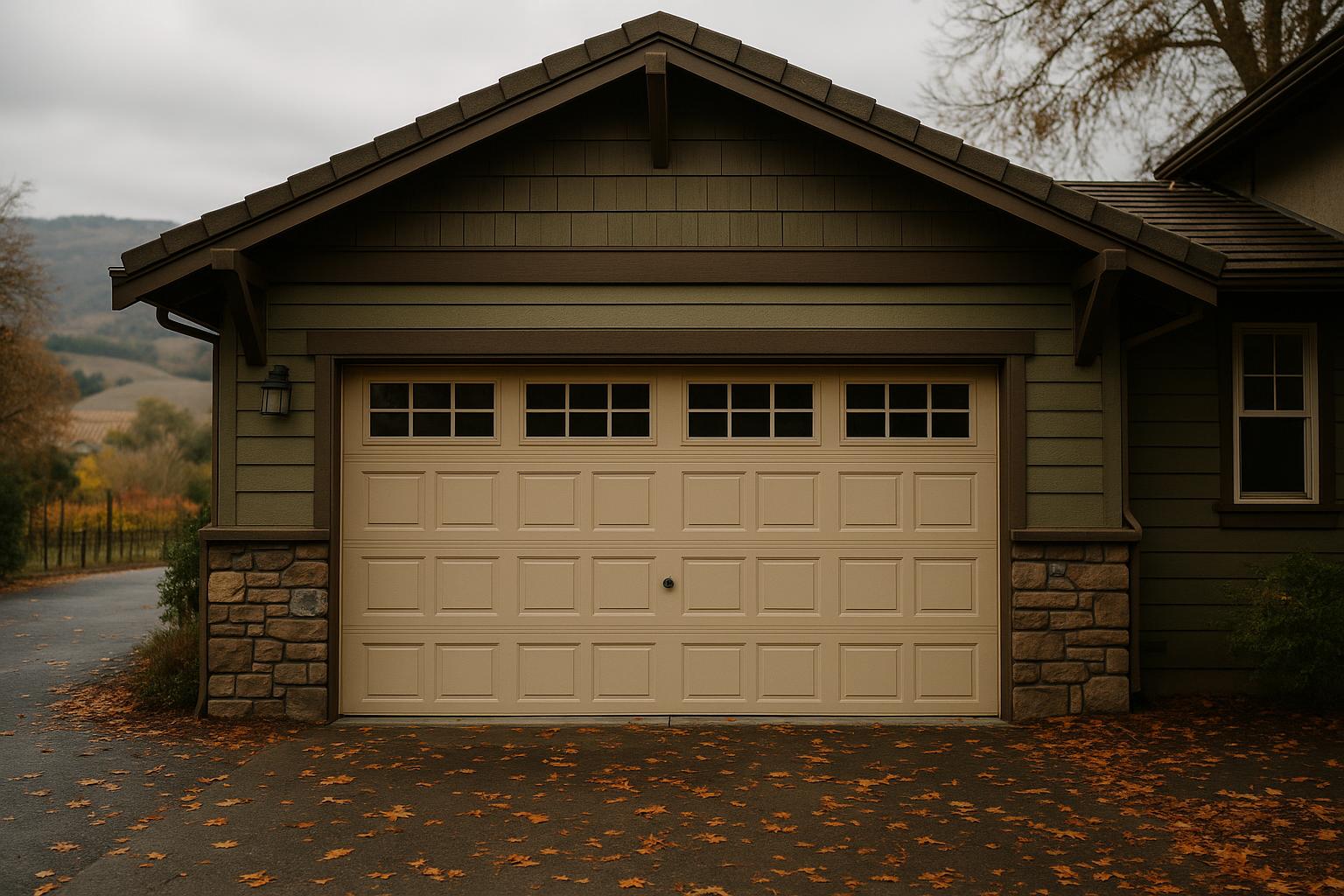
Winter Weather and Your Garage Door: Why Preparation Matters
When most Cloverdale homeowners think about winterizing their homes, they focus on the furnace, the roof, and the windows. The garage door — the largest moving part of your house — often gets overlooked. That's a mistake.
Cloverdale's winters bring cool temperatures, heavy rain, and occasional frost. While we don't deal with the extreme cold that other parts of the country face, the combination of moisture, temperature swings, and wind can still cause real problems for garage doors that aren't properly maintained. A door that worked fine all summer can suddenly stick, leak, or refuse to open on the first cold morning of the season.
The good news is that a little preparation goes a long way. Here's a step-by-step guide to getting your garage door ready for winter so you can avoid breakdowns, keep your garage dry, and stay comfortable all season long.
1. Inspect and Replace the Weatherstripping
The rubber weatherstripping along the bottom of your garage door and around the frame is your first line of defense against rain, cold air, and pests. Over time, it cracks, hardens, and pulls away from the door.
Walk around the inside of your closed garage door and look for:
- Visible gaps between the door and the floor
- Cracked, brittle, or flattened rubber seals
- Water stains or puddles near the base of the door
- Daylight visible around the edges
Replacing worn weatherstripping is one of the most affordable upgrades you can make, and it has an immediate impact on keeping your garage warmer and drier during Cloverdale's rainy months. If you're not sure what type of seal your door uses, a garage door technician can match the right product to your specific door.
2. Lubricate All Moving Parts
Cold weather causes metal components to contract slightly, which increases friction. If your garage door's moving parts aren't properly lubricated, you'll notice the door operating more slowly, more loudly, or more roughly when temperatures drop.
Apply a silicone-based or lithium-based garage door lubricant to the following:
- Hinges
- Rollers (metal rollers only — skip nylon rollers)
- Springs
- Bearing plates
- The lock mechanism
Avoid using WD-40 as a lubricant. It's a solvent and degreaser, not a long-term lubricant. It can actually strip away the protective coating your parts need during wet weather.
3. Test the Balance of Your Door
A properly balanced garage door should stay in place when you lift it halfway and let go. If it slides down or shoots up, the springs are out of balance, and your opener is working harder than it should.
An unbalanced door puts extra strain on the opener motor, which can lead to premature failure — especially during winter when the motor is already working against colder, thicker lubricant and tighter metal parts. If your door fails the balance test, don't try to adjust the springs yourself. Garage door springs are under extreme tension and should only be handled by a trained professional.
4. Check the Auto-Reverse Safety Features
Your garage door opener has two safety systems designed to prevent the door from closing on a person, pet, or object: the photo-eye sensors near the floor and the mechanical auto-reverse function. Both should be tested before winter.
To test the photo-eye sensors: Close the door and wave an object (like a broom handle) in front of one of the sensors. The door should immediately reverse.
To test the mechanical auto-reverse: Place a 2x4 flat on the ground in the door's path. When the door contacts the board, it should reverse within two seconds.
If either test fails, your opener needs adjustment or repair. This is especially important during winter when shorter days mean you're more likely to be operating your garage door in the dark.
5. Inspect the Door Panels for Damage
Take a close look at the door panels themselves. Wooden doors are particularly vulnerable to moisture damage during Cloverdale's wet season. Look for:
- Warping or swelling in wood panels
- Peeling or chipped paint that exposes bare wood or metal
- Rust spots on steel doors
- Cracks in fiberglass or vinyl panels
Small problems now become big problems after months of rain. A cracked panel lets moisture into the door's interior, which can cause warping, rust, and structural weakness. Touch up any exposed areas with exterior-grade paint or sealant before the heavy rains arrive.
6. Clear the Tracks and Check Alignment
Debris, dirt, and cobwebs can accumulate in your garage door tracks over the summer and fall. Wipe down the tracks with a damp cloth to remove buildup. While you're at it, visually inspect the tracks for dents, bends, or gaps where the track meets the frame.
Misaligned tracks can cause the door to bind, jump, or operate unevenly — problems that tend to get worse in winter when metal contracts. If you notice the door wobbling or hesitating as it moves, the tracks may need professional realignment.
7. Consider Insulation
If your garage is attached to your home — as many are here in Cloverdale — an uninsulated garage door can be a major source of heat loss. Even if you don't heat your garage, an insulated door helps maintain a more stable temperature, which protects anything you store in the garage and reduces the workload on your home's heating system.
Insulation kits are available for retrofit, but for the best results, consider upgrading to a factory-insulated door. Modern insulated garage doors are surprisingly affordable and can make a noticeable difference in your energy bills during the cooler months.
8. Test the Opener Battery Backup
If your garage door opener has a battery backup, test it before winter storm season. Cloverdale and the surrounding Sonoma County communities can experience power outages during heavy storms, and a working battery backup means you won't be locked out — or stuck inside — when the power goes down.
If your opener doesn't have a battery backup, make sure you know how to use the manual release cord to operate the door by hand during an outage. It's a simple process, but it's better to practice it once in good weather than to figure it out in the dark during a storm.
When to Call a Professional
Many of these winterization steps are things you can handle on your own with basic tools and a free afternoon. But some tasks — spring adjustment, track realignment, opener repair, and panel replacement — are best left to experienced technicians.
At Precision Garage Door of Cloverdale, we offer comprehensive maintenance services that cover every item on this list and more. If you'd rather have a professional handle the entire winterization process, or if you've spotted a problem that needs expert attention, we're happy to help. We serve homeowners throughout Cloverdale, Healdsburg, Geyserville, and the surrounding communities, and we'll make sure your garage door is ready to handle whatever this winter brings.
Don't wait until the first big storm to find out your garage door has a problem. A little preparation now saves you from emergency repairs later.