
Your Garage Door Springs Are Doing More Work Than You Think
Every time you open or close your garage door, the springs are doing the heavy lifting — literally. A standard two-car garage door can weigh between 150 and 250 pounds, and without properly functioning springs, your opener alone couldn't move it. Springs counterbalance that weight, making the door feel almost weightless as it travels along the tracks.
But like any mechanical component under constant stress, garage door springs wear out over time. For homeowners in Cloverdale and the surrounding Sonoma County communities, understanding the lifespan of your springs and knowing when to replace them can save you from an inconvenient — or even dangerous — situation.
How Long Do Garage Door Springs Last?
Most standard garage door springs are rated for approximately 10,000 cycles. One cycle equals one full open and one full close. If your household opens and closes the garage door four times a day, that works out to roughly seven years of use before the springs reach the end of their expected lifespan.
However, several factors can shorten or extend that timeline:
- Frequency of use: Families that use the garage as the primary entrance may cycle the door six to eight times daily, cutting the spring life down to four or five years.
- Climate and humidity: While Cloverdale enjoys a relatively mild climate, the seasonal temperature swings between hot, dry summers and cool, damp winters can cause metal fatigue and corrosion over time.
- Maintenance habits: Springs that are regularly lubricated and inspected tend to last longer than those that are neglected.
- Spring quality: Not all springs are created equal. Higher-quality, galvanized springs can last 20,000 cycles or more — essentially doubling the lifespan of standard springs.
Torsion Springs vs. Extension Springs
There are two main types of garage door springs, and each has different characteristics when it comes to wear and replacement:
Torsion Springs
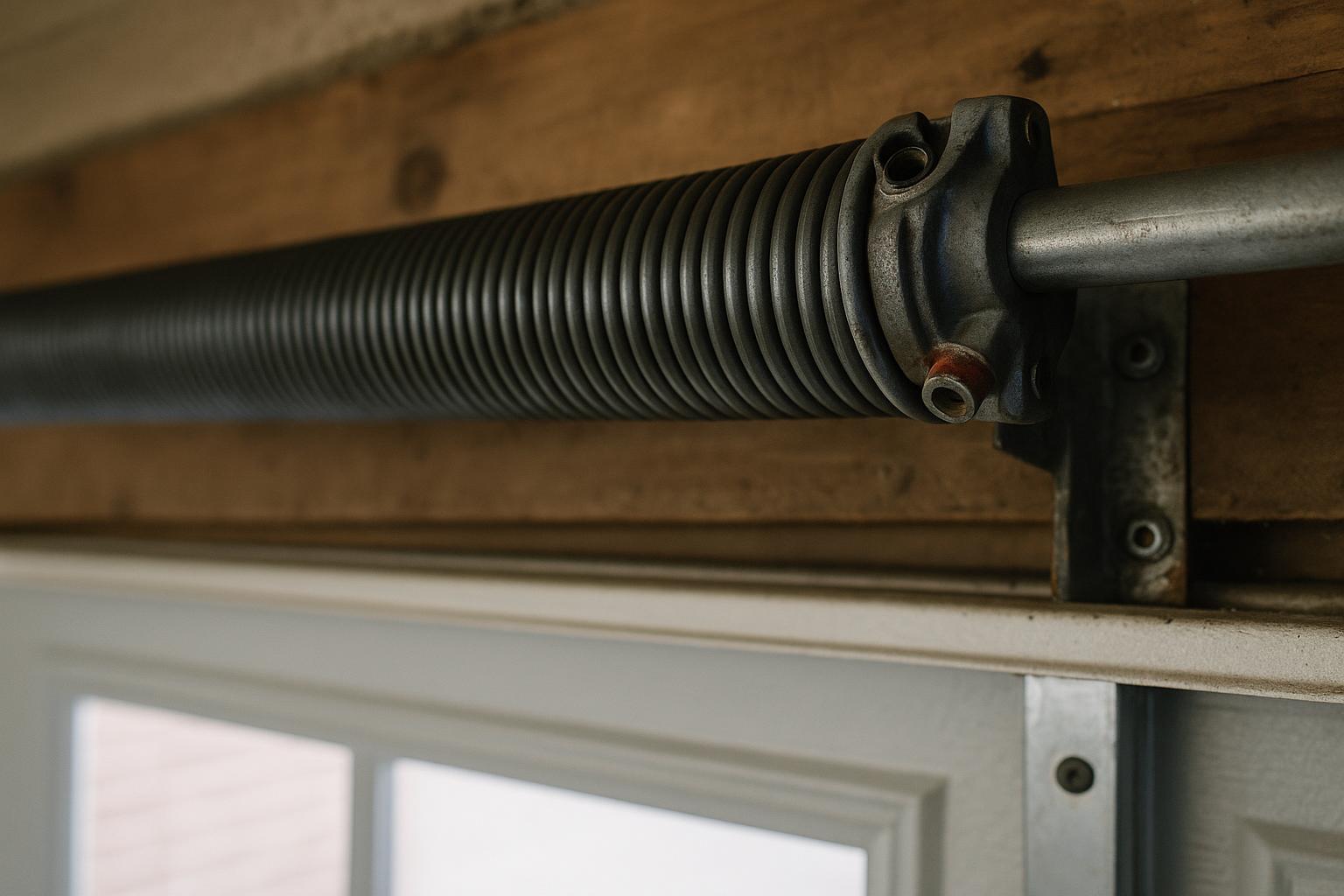
Torsion springs are mounted horizontally above the garage door opening. They use torque to lift the door and are the more common type found in modern garage door systems. Torsion springs tend to be more durable, offer smoother operation, and are generally considered safer because they're contained on a shaft even if they break.
Extension Springs
Extension springs run along the horizontal tracks on either side of the door. They stretch and contract to provide lifting force. Extension springs are more common in older installations and on lighter, single-car doors. When they break, they can snap violently, which is why safety cables should always be installed through or alongside them.
Regardless of which type your garage door uses, both will eventually need replacement. If you're unsure what kind of springs you have, a quick inspection by a trained technician can identify your setup and assess the condition of the hardware.
Warning Signs Your Springs Are Wearing Out
Springs rarely fail without giving some advance warning. Here are the signs Cloverdale homeowners should watch for:
- The door feels heavier than usual: If you disconnect the opener and try to lift the door manually, it should move with minimal effort. A door that feels heavy or won't stay open on its own likely has weakening springs.
- The door opens unevenly: If one side of the door rises faster than the other, one spring may be more worn than its counterpart.
- Visible gaps in the spring coils: A torsion spring that's nearing failure will often show a visible gap or separation between the coils, even when the door is closed.
- Loud bang from the garage: If you heard a loud, gunshot-like noise coming from your garage, a spring has likely already broken. You'll usually find the door won't open afterward.
- The opener struggles or stops mid-cycle: Your garage door opener is designed to move a counterbalanced door. When springs weaken, the opener has to work harder, which can cause it to strain, overheat, or stop functioning.
- Jerky or shaky movement: A door that shakes, jerks, or moves in fits and starts during operation may have springs that are losing their tension unevenly.
Why You Should Never Replace Garage Door Springs Yourself
We understand the DIY spirit — it's alive and well in communities like Cloverdale, Healdsburg, and Geyserville, where homeowners take pride in maintaining their properties. But garage door spring replacement is one job that should always be left to professionals.
Here's why:
- Extreme tension: Torsion springs are wound under tremendous force. A spring that releases unexpectedly can cause severe injury or even death.
- Specialized tools required: Proper spring replacement requires winding bars, clamps, and precise measurements. Using the wrong tools or techniques can lead to catastrophic failure.
- Matching specifications: Springs must be matched to the exact weight and size of your door. Installing the wrong spring can damage your opener, warp the door, or create an unsafe operating condition.
A trained technician can complete the job safely, usually in under an hour, and ensure everything is properly balanced and adjusted before leaving.
Should You Replace Both Springs at the Same Time?
If your garage door uses two springs — which most double-car doors do — we strongly recommend replacing both at the same time, even if only one has broken. The reasoning is straightforward: both springs were installed at the same time and have endured the same number of cycles. If one has failed, the other is likely close behind.
Replacing both springs together also ensures the door is evenly balanced, reduces the chance of a second service call in the near future, and can save you money on labor since the technician is already on-site.
Extending the Life of Your Garage Door Springs
While springs will eventually wear out no matter what, regular maintenance can help you get the most out of them:
- Lubricate the springs every six months with a silicone-based or white lithium spray. This reduces friction and helps prevent rust.
- Schedule an annual inspection to have a professional check the spring tension, balance, and overall condition of your garage door system.
- Keep the tracks and rollers clean so the door moves freely and doesn't put extra strain on the springs.
- Consider upgrading to high-cycle springs during your next replacement. The upfront cost is slightly higher, but the extended lifespan makes them a smart long-term investment.
When It's Time, Call a Local Team You Can Trust
If your garage door springs are showing signs of wear — or if one has already snapped — don't wait for the problem to get worse. A broken spring means your garage door is essentially out of commission, and attempting to operate it with a failing spring can damage other components or put your family at risk.
At Precision Garage Door of Cloverdale, we provide fast, honest spring replacement services to homeowners throughout Cloverdale, Healdsburg, Geyserville, Dry Creek, Asti, and Lakeport. We show up on time, explain exactly what needs to be done, and make sure your door is operating safely and smoothly before we leave. If you're not sure whether your springs need attention, give us a call — we're happy to take a look and give you a straightforward assessment.